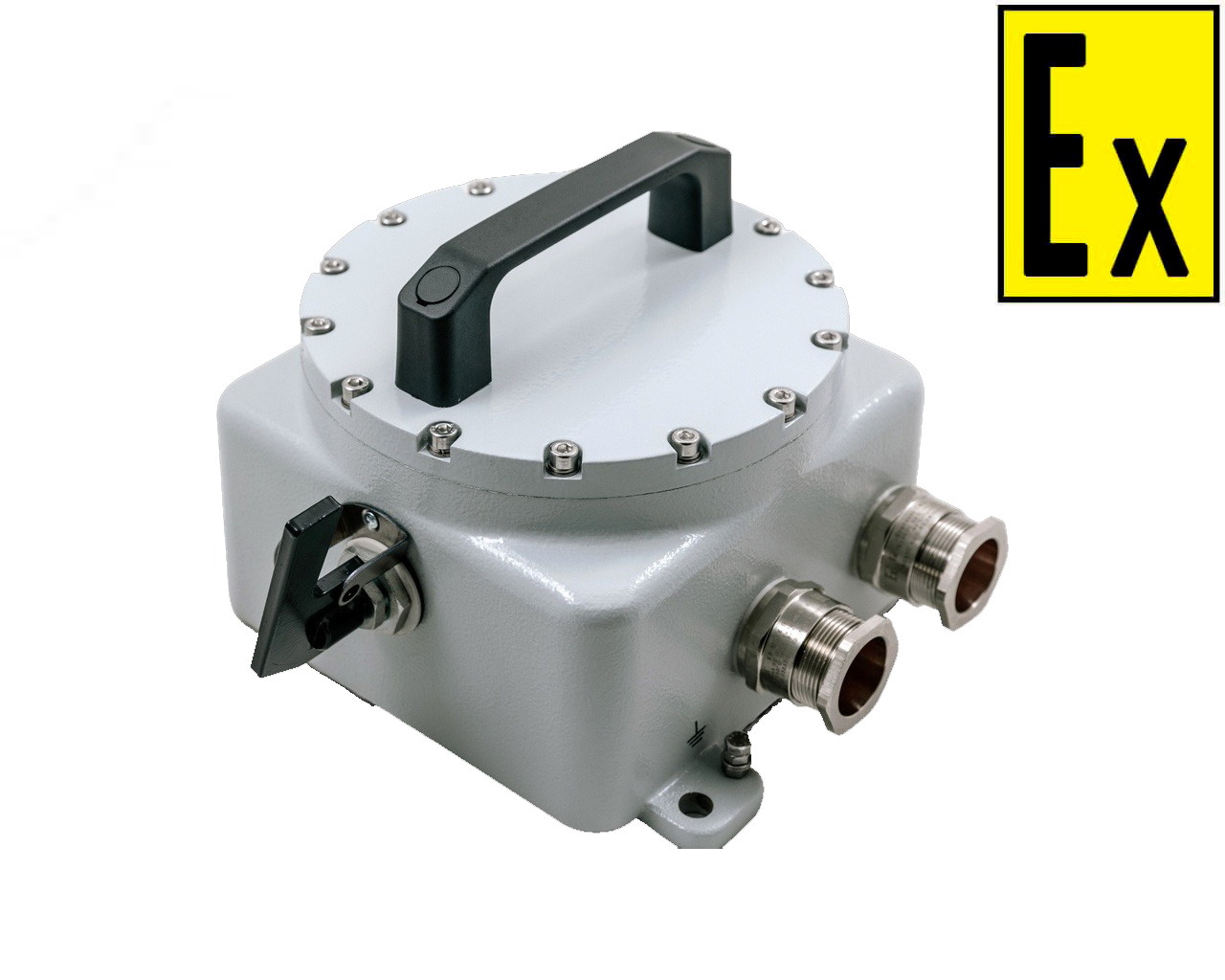
An explosion-proof switch is a switching device enclosed in a special protective shell, designed to protect electrical networks from short circuits and overloads , as well as to quickly turn on and off equipment in hazardous areas .
Such devices are used in oil and gas, chemical, mining and coal industries where explosive gases, vapors or dust may be present in the air.
Design features and explosion protection principle
The device's primary purpose is to isolate sparks and high temperatures generated when contacts open from the external explosive environment. The switch is a ready-made solution, housed in an explosion-proof enclosure with cable entries and a remote control handle. Depending on the order, the switch is equipped with:
- a circuit breaker designed to reliably protect electrical circuits from overloads and short circuits;
- a circuit breaker with a residual-current device (RCD) that provides protection against overloads, short circuits and leakage currents of various types;
- switch-disconnector (load switch) for manual connection and disconnection of the load.
Explosion-proof enclosure (protection type "d"): Internal components (contacts, thermal and electromagnetic tripping devices) are housed in a highly durable aluminum alloy housing. The housing withstands the pressure of an internal explosion and prevents flames from escaping.
Main technical characteristics
- Explosion protection marking: 1ExdbIICT6GbX/ExtbIIICT85СDbX
- Nominal voltage: 400V (three phase) AC (50/60Hz).
- Nominal current: from 6 A to 63 A (depending on the order).
- Housing protection rating: IP66 (complete protection against dust and powerful water jets).
- Body material: corrosion-resistant modified aluminum alloy
- Climatic performance: UHL1 (for outdoor work in regions with moderate and cold climates).
- Operating temperature: from –60 °C to +80 °C for extreme climatic conditions.
Application areas
- Oil and gas complex: Drilling platforms, oil refineries, gas compressor stations.
- Chemical industry: Production of varnishes, paints, fertilizers and pharmaceutical components.
- Mining industry: Coal and shale mines, underground workings (hazardous due to methane and coal dust).
- Transport infrastructure: Fuel filling stations, sea terminals for bulk cargo.